No products in the cart.

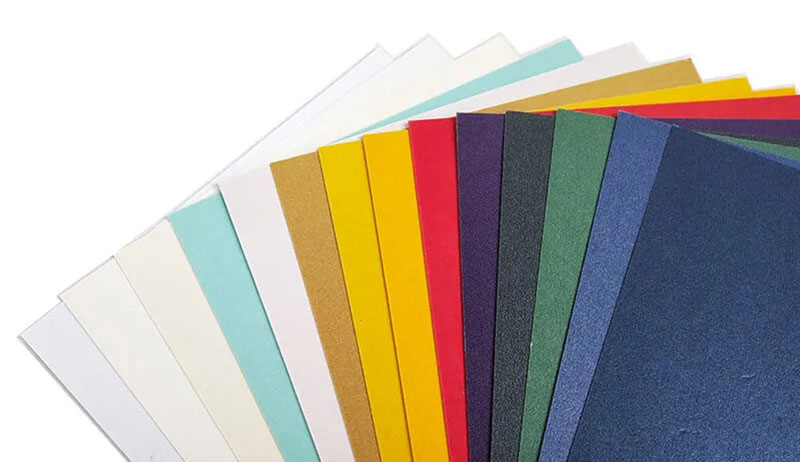
Choosing the right paperboard is a crucial decision for protecting your product, enhancing its value, and maintaining its sustainable development. Several factors should be considered when selecting the right paperboard: the product’s inherent requirements for packaging rigidity and strength; the product’s requirements for packaging safety; the printing and processing requirements for packaging materials; production and logistics costs; transportation methods, transportation time, and storage conditions. These factors all need to be considered.
一、First, you need to clarify the product requirements
You need to clarify the answers to the following questions:
- Product type & fragility:Is the product glass, liquid substances, dry food, cosmetics and other chemical products, electronic products, clothing?
- Intended use:Shelf retail, basic packaging, online store express delivery, direct packaging in physical stores, bulk packaging and transportation?
- Contact with the product or not:come into direct contact with the object or skin, or should it be separated by a layer first? This determines whether the packaging needs to use food grade and environmentally friendly adhesives.
- Product usage environment:Whether it is in a humid, low-temperature environment for a long time, or has been stored or transported for a long time?
- Barrier needs:Is there a need to isolate grease, oxygen, and moisture?
- Brand positioning:High-end, mid-end, low-end, economy?
- Printing quality:High definition and vivid, uniform color, slight color difference is acceptable, color and clarity are average but acceptable?
- Budget and minimum order quantity:What quantity do you need, and what price do you expect per unit?
二、Know the main paperboard families and when to use them
There are several common types of cardboard, each with its own advantages and disadvantages. By figuring out their characteristics, you can know what type you need.
Solid Bleached Sulfate (SBS) – Art Paper
- Appearance and use:The paper is fine, smooth and bright white on both sides, and can be printed on both sides, making it suitable for high-end printing.
- Best for:High-end cosmetics, high-end food, high-end home furnishings, high-end gifts.
- Flaw:Higher cost.

Folding Box Board (FBB) – White Card
- Appearance and use:The paper is white on both sides, but smooth on one side. It can be printed on both sides and has a wide range of applications.
- Best for:Cosmetics, skin care products, medicines, food, alcoholic beverages, etc..
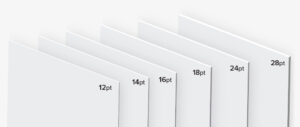
Coated Recycled Board (CRB) / Clay Coated News Back (CCNB) – White Board
- Appearance and use:Recycled paper, with a white surface layer for printing and other processing, and the inter layer and back are gray and do not support printing and other processing.
- Best for:Daily retail, low-price wholesale, disposable products, products with no requirements for printing and quality.
- Flaw:The gray color on the back is not beautiful, and the hardness and stiffness are not enough.

Coated Unbleached Kraft (CUK) / Virgin Kraft – Kraft Paper
- Appearance and use:Both inside and outside are brown, and the outside is coated paper. Usually only supports outside printing, no lamination is required. Suitable for products that require high hardness and stiffness or need to be environmentally friendly.
- Best for:Food, clothing, cosmetics, baby products, etc..
- Flaw:Higher cost.
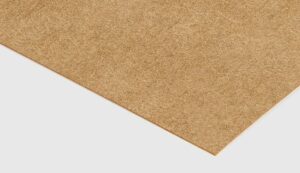
Corrugated Paperboard (fluted)
- Appearance and use:The overall color is gray-brown. Used for shipping boxes; many flute profiles (A, B, C, E, F) and multi layer constructions (single, double wall).
- Best for:Transport protection, transport of glass and other fragile products or large and heavy cargo.
- Flaw:Not suitable for colorful printing.

三、Does your food or skin care products come into direct or indirect contact with packaging, inks, adhesives and coatings
When packaging food, use food-grade boxes or bags whenever possible. If your food already has a base packaging layer that comes into contact with food, non-food-grade paperboard can be used for the outer packaging. However, for food safety and national laws and regulations regarding food packaging, please consult relevant laws and regulations when choosing food packaging.
四、Printing & finishing: Match your brand look
- Solid Bleached Sulfate (SBS):It can clearly reproduce printed designs and is suitable for high color gamut color printing. Both sides of the paper are equally smooth and delicate, with the same whiteness, making it suitable for double-sided printing, lamination, and other processes such as hot stamping, embossing, debossing, embossing, and UV.
- Folding BoxBoard (FBB): It can clearly reproduce printed designs and is suitable for high color gamut color printing. The front side of the paper is smooth and has better printing effects, while the back side is rough. Although it can be printed, the printing effect is not as good as the front side. And the front side of the paper usually supports lamination, hot stamping, embossing, toothpaste, embossing and UV processes.
- Coated Recycled Board (CRB) / Clay Coated NewsBack (CCNB): The white side also produces a relatively good printing effect, but the whiteness of the paper is not enough, and the back and center appear gray. It is commonly used for express boxes. It can also meet the packaging needs of many products, such as toothpaste boxes, soap boxes and other disposable packaging products.
- Coated Unbleached Kraft (CUK) / Virgin Kraft:Since the paper is generally brown, it is not very effective in displaying colors. It is necessary to first print a white base or use a more advanced printing press. Lamination is not required, but hot stamping, embossing, debossing, embossing, and UV treatments are possible.
- Corrugated Paperboard (fluted):Color printing is not usually done. Small areas of white and black can be screen printed to control costs. Lamination, hot stamping, embossing, debossing, embossing and UV treatment are usually not performed.
五、Sustainability
- Recyclable? Many plain paper boards are widely recyclable. However, the recycling process for PE-coated cardboard is more complicated. You may need to tear off the PE film on the surface before it can be recycled. Different countries have different standards for recycling, so you need to determine according to local regulations.
- Forest certification (FSC)?With this certification, you can trace the source of raw materials, which is usually required by big brands and large buyers.
六、Cost and MOQ
- The price of SBS paper is higher than that of FBB paper, which in turn is higher than that of CRB paper. Under the same grammage and printing process, the price of SBS paper is the highest and that of CRB paper is the lowest.But at Qingdao Yilucai Packaging Products Co., Ltd., their minimum order quantity is the same.
- Digital printing has a lower minimum order quantity requirement, but the larger the quantity, the more expensive the total price. In comparison, offset printing is the most popular and economical printing method, but this printing method requires a printing plate.
- UV printing is currently the most expensive printing method, not only because the machine itself is more expensive and the printing technology is more advanced, but also because the printed colors are more vivid and more tolerant to the printing carrier.
七、Quickly Lock the Appropriate Paper Type
- Luxury cosmetics, high-end gifts, paper bags, high-definition printing:SBS or FBB (FBB for slightly lower cost).
- Makeup, cosmetics, medicines, food, paper bags:
- Retail daily necessities, paper towels, disposable gloves:CRB/CCNB.
- Takeaway hot/oily foods: PE-coated board or liner + paperboard (ensure localrecyclability /compostability claims justified).
- E-commerce shipping:Corrugated paperboard.
八、Conclusion
There is no best cardboard choice, only the one that suits you best is the best. As a comprehensive manufacturer and trader with 23 years of experience in production and sales, we offer a variety of solutions tailored to the client’s product, market positioning, price, type and weight, budget, and other factors. We even recommend appropriate processes to enhance brand value and enhance the buyer’s experience. A qualified merchant is more than just a seller; they must also be a good problem solver.