
How to Package Watches and Pocket Watches: From Pillows to Presentation
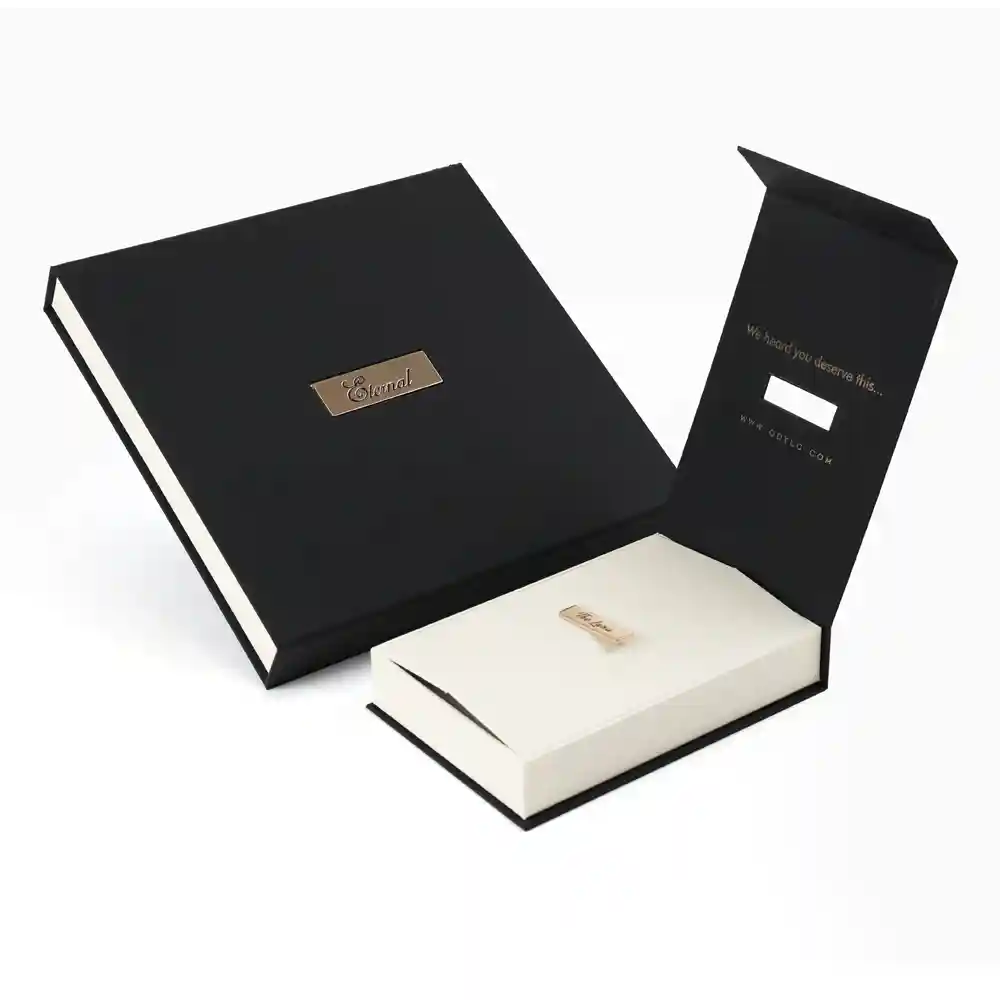
To package a watch properly, match three dimensions: the pillow insert to the case diameter (38–45 mm covers most of the market), the cavity depth to the case thickness plus 5 mm, and the box interior to the accessories that ship with it — manual, warranty card, spare links. Watches carry the highest average order value of any gift category we produce packaging for, and the box is the first physical proof of that value. A $400 watch in a folding carton reads as a $150 watch; the same watch in a rigid box with a firm pillow reads as $600.
This guide covers the anatomy of a watch box, the three pillow types, rigid versus folding economics, the under-served pocket watch category, engraving display, and how to ship high-value pieces without claims.
Watch Packaging Anatomy
A watch box is a small system, not a box with foam in it. Four components have to work together:
1. Outer box (rigid shell). The visible object. Greyboard 1200–1500 gsm wrapped in matte paper, leatherette or textured stock. Its job is presence — weight, a firm lid, no flex when lifted by one corner.
2. Pillow insert (the core). Holds the watch at display angle, with the caseback pressed against a soft surface rather than a hard one. The pillow’s diameter and firmness decide whether a 42 mm diver sits proud of the box or sinks into it.
3. Manual slot. A shallow recess, usually under the pillow platform or in the lid liner, sized for a folded booklet (typically 8 × 8 cm folded). If the manual sits loose on top of the watch, the crystal takes the pressure.
4. Warranty card slot. A dedicated die-cut pocket — 9 × 5.5 cm for most standard cards. Brands that skip this end up with the card floating between pillow and lid, which is the most common cause of “box arrived with card creased” complaints.
The exploded view, top to bottom: lid → inner liner with card pocket → manual recess → pillow platform → pillow → base tray. Build the spec sheet in this order and the box quotes itself.
One dimension to calculate before anything else: interior height = pillow height + case thickness + 5 mm clearance. A 44 mm chronograph on a 20 mm pillow needs roughly 40 mm of interior height, which lands the outer box at 55–60 mm with a 12 mm lid. Undersize it and the crystal presses the liner; oversize it and the watch rattles — both read as carelessness at this price point.
Pillow Inserts
Three options, each with a distinct price and feel:
| Pillow type | Firmness | Case fit | Relative cost | Best for |
| Standard foam pillow (fabric-wrapped) | Medium | 38–42 mm | Lowest | Volume lines, sub-$150 retail |
| High-resilience (HR) foam pillow | Firm | 40–45 mm, heavier cases | Medium | Divers, chronographs, 100 m+ water resistance |
| Leather / leatherette pillow | Firm, slight give | 38–45 mm | Highest | Premium and engraving-led lines |
How to choose:
- Case weight decides firmness, not case size. A 42 mm titanium watch needs a softer pillow than a 40 mm steel diver. If the watch compresses the pillow by more than 3 mm, the pillow is too soft.
- Bracelet versus strap changes the pillow. Metal bracelets sit best on a firm pillow with the clasp tucked behind; leather straps need a slightly wider pillow so the strap curves rather than kinks.
- Cuff fit matters. The pillow should be 3–6 mm narrower than the closed bracelet loop — enough friction to hold, not enough to stretch a new strap.
Our standard custom watch boxes ship with the pillow sized to your case drawing; send the case diameter, thickness and bracelet inner circumference and we return the insert spec free.
Rigid vs Folding Watch Boxes
The structural decision drives cost, experience and freight — often in ways brands underestimate:
| Dimension | Rigid box (greyboard, wrapped) | Folding box (corrugated/carton) |
| Unit cost (500–2,000 pcs) | $1.50 – 3.50 | $0.45 – 1.10 |
| Perceived value | High — weight, firm lid, no flex | Medium — depends heavily on print |
| Shipping volume | Ships assembled; ~3–4× the freight volume of flat | Ships flat; lowest freight and storage cost |
| Assembly at your end | None | 20–40 seconds per unit |
| Presentation ceiling | Highest — foil, deboss, liner, ribbon | Good — print-led, limited structural drama |
| Best use | Retail, gifting, engraving, $150+ | E-commerce, subscription, promotional |
The practical answer for most brands is a hybrid: a rigid box for the hero watch and folding boxes for secondary SKUs and promotional bundles. Freight is where folding wins quietly — a 40 ft container holds roughly 3–4× more flat-packed folding boxes than assembled rigid boxes, which can swing landed cost by 15–20% on large programs.
Pocket Watch Packaging
Pocket watches are the category’s blind spot. Search demand is real — “pocket watches” carries around 5,400 monthly searches — but almost no packaging is designed for them: most sellers ship a round watch in a rectangular box with generic foam, and the watch slides into a corner.
The structure that works: a round recess insert (die-cut EVA or molded pulp, flocked or velvet-faced) with a diameter 4–6 mm larger than the watch case, plus a chain channel — a shallow curved groove that holds the chain in a loose loop so it does not tangle with the bow. Depth should clear the crown and the bow (the hanging ring) by 3–5 mm, because those are the two points that take pressure.
Design direction: pocket watches carry a vintage, heirloom signal. The packaging that fits is not modern minimalism — it is deep green or oxblood with gold foil, a hinged lid, and a fabric-faced round recess. A small envelope pocket in the lid for the chain and a certificate card completes the presentation. This is the one watch sub-category where ornate is correct; resist the urge to apply the same charcoal-and-deboss template as wristwatches.
Commercial note: because almost nobody packages pocket watches properly, this is a category where packaging is a genuine differentiator rather than a cost line — a brand that ships a pocket watch in a purpose-built round-recess box has no direct competitor doing the same at the same price.
Engraved Watch Presentation
For engravable watches — a strong men’s gifting search cluster — the engraving is the product, and the packaging has to show it. Three design rules:
- Display the caseback, not the dial. Standard watch boxes present the face; an engraved watch needs the caseback visible. Solutions: a tilt platform that holds the watch at 30–45 degrees with the back facing the opening direction, or a removable pillow the buyer lifts out and turns. The tilt platform is the better customer experience and costs about $0.15–0.30 more per unit.
- Never let the engraved surface touch a hard insert. Engraved stainless shows micro-scuffs immediately. A velvet or suede contact face on the platform, plus 2 mm of clearance, is the minimum.
- Add a light. A small LED in the lid lifts engraved metal dramatically in photographs — and photographs are how engraved gifts get shared. Keep the LED recessed 8 mm from the liner surface so it never contacts the case.
Shipping High-Value Watches
A watch box is presentation packaging; shipping it requires a second system around it:
- Declare the value, insure it. Carrier liability defaults rarely cover watch values. Use third-party parcel insurance above $500 declared value, and photograph the packed parcel — three layers, before sealing.
- Discreet outer carton. Never brand the shipping box for watches. A plain outer carton with no product descriptor is the single most effective anti-theft measure at this value tier.
- Drop and vibration testing. Our standard is ISTA 1A — a 76 cm drop in 10 orientations — plus a vibration run for multi-leg international routes. For watches we recommend ISTA 2A if your parcel exceeds 3 kg with accessories.
- Moisture and pressure. Watches are water-resistant but their boxes are not: a poly bag around the inner box prevents condensation marks on leatherette during air transit, and prevents the lid liner from warping in humid climates.
Get Custom Watch Boxes Quoted
Qdylc manufactures rigid watch boxes, pocket watch round-recess inserts and engraving display platforms — sized to your case drawings, tested to ISTA standards, and shipped DDP to the US, EU, UK and Australia. Free insert drawings within one business day, mockups in 24 hours, low MOQ from 100 pieces.