
No products in the cart.

Wedding Ring Packaging: A Complete Guide for Jewelry Studios
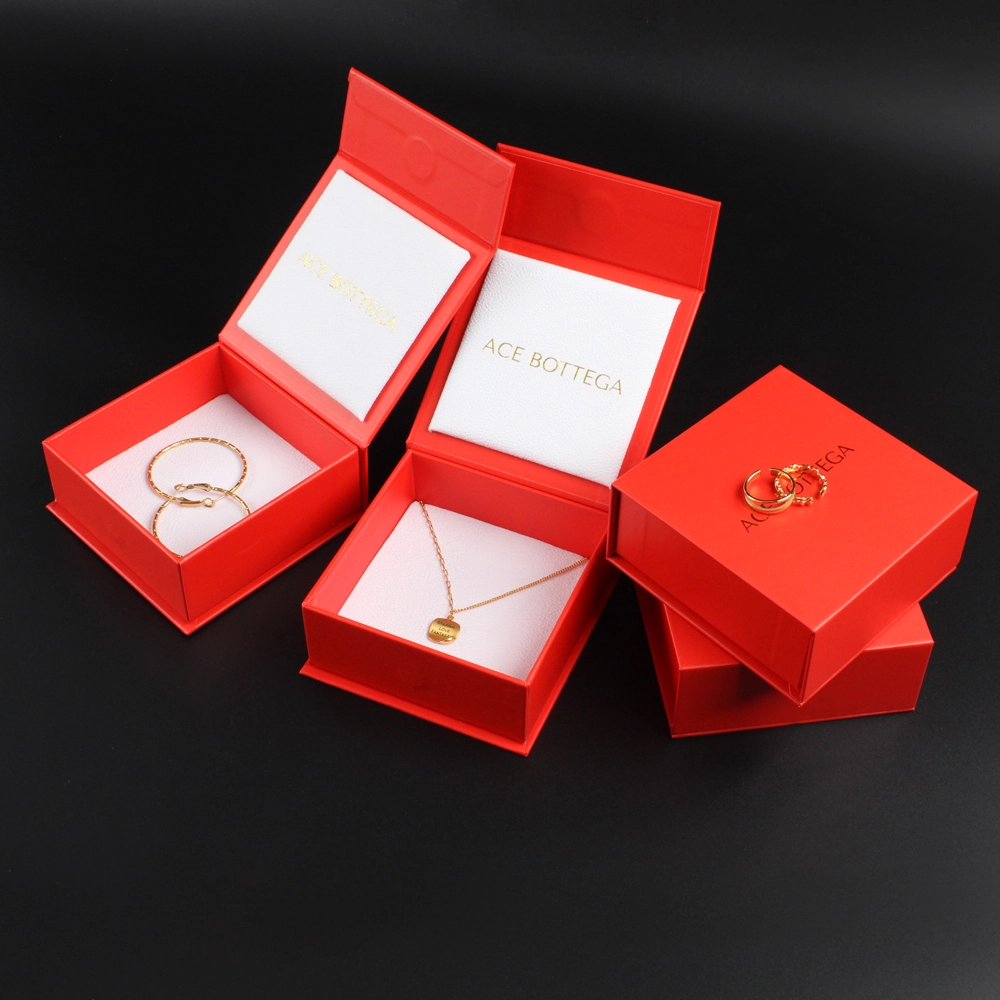
A wedding ring’s box serves four different moments: the proposal, the ceremony exchange, the days right after, and the decades of storage that follow. No single box does all four well — the studios that get this right design for the moments separately and let one structure cover two of them at most.
This guide lays out the requirements per moment, the slot geometry that wide bands and Claddagh settings actually need, the material rules that keep silver bright and plating intact, and how studios can run all of it on a 100-piece order.
Four Moments, Four Requirements
| Moment | What Matters Most | Recommended Structure |
| Proposal | One-handed opening, clean reveal, no wobble | Flip-top magnetic box, lid opens 90–100° |
| Ceremony exchange | Both rings visible and liftable together | Two-slot shallow tray with removable insert |
| Keepsake after the day | Portable, scratch-safe | Small rigid box, velvet contact |
| Long-term storage | Sealed, tarnish-controlled, dated | Sealed box + tarnish strip + date card |
Most brands over-invest in the proposal moment and ignore the other three. The counterintuitive truth: the proposal box is seen for minutes; the storage box is opened for decades and photographed for social media every anniversary. A modular system — one proposal box, one two-ring tray that nests inside it — covers all four moments with a single structural spec.
Slot Design for Wide Bands
Standard ring inserts assume a 2–4mm band. Wedding rings don’t cooperate: men’s bands run 6–10mm, and signet or Claddagh settings reach 12mm across the face. Three rules fix the geometry:
Slot width = band thickness + 0.5mm. Tighter than that and insertion scratches the plating; looser and the ring rotates in transit, which is how engraved faces pick up marks before they’re ever worn.
Slot depth ≈ 60% of the ring’s face height. Deep enough that the ring can’t tip out, shallow enough that it can be lifted with one finger — the lift-out test is what a jeweler’s customer actually performs.
Local deepening for relief settings. A Claddagh or fully sculpted band has a crown that stands higher than the band’s cross-section. The wrong fix is raising the whole insert, which lets the band rotate in its slot. The right fix is deepening the recess only where the crown sits. It adds nothing to the tooling on a custom insert and keeps the ring locked everywhere else.
Two-ring spacing: 15mm minimum between slots. Less than that and the bands contact each other under transit vibration — two white gold rings sharing a tray with 10mm spacing arrive with dull marks where they rubbed. The spacing also matters at the ceremony: 15mm is roughly the distance a thumb and forefinger need to lift one ring without disturbing the other.
Materials and Metal Safety
The box material interacts with the ring metal over time — which matters enormously for a product that sits in storage for decades:
| Metal | Risk | Packaging Response |
| Sterling silver | Sulfide tarnish within months in open air | Anti-tarnish strip per box; sealed lid construction |
| White gold / platinum | Scratch sensitivity | Velvet contact; no paper-card direct touch |
| Yellow gold | Low risk | Standard velvet insert |
| Rose gold | Alloy-sensitive; discolors near some plastics | Avoid PVC/PET contact; flocked liners |
| Plated bands | Plating wears on insertion | Slot width +0.5mm rule; smooth insert edges |
The silver rule is the one studios most often miss: an anti-tarnish strip prevents the single most common “my ring arrived perfect but tarnished in the box” support ticket, at a per-unit addition too small to appear in a quote conversation. For long-term storage versions, pair the strip with a gasket-sealed lid — a two-piece box that isn’t sealed lets air (and sulfur) circulate freely.
Presentation Details
The details that separate a wedding box from a generic ring box:
Interior lid personalization — names and the date, foil-stamped. With digital foil there’s no die per name, so a studio offering client-specific boxes at 100 pieces carries no extra setup per unit. This is the feature that lets a small studio sell “your wedding date, in the lid” as a product rather than a special request.
Ribbon: 15mm width, cross-tied. Narrower reads flimsy; wider buries the lid line. The cross tie keeps the bow centered regardless of lid orientation.
Lid opening angle: 90–100°. Anything under 85° makes the box feel cramped in the hand at the exact moment it’s being photographed — the proposal and the ceremony are both filmed, and the lid angle is visible in every frame.
Bulk Orders for Studios
Studios need small quantities of a custom product repeatedly — 50–200 boxes a season, each perhaps personalized per client. The structure that solves it:
One universal structure + variable-data foil. A single dieline and insert geometry serves every client; the personalization happens at the foil stage, which carries no per-name tooling cost with digital foil. One box spec, infinite names.
Order mechanics at Qdylc: 100-piece minimum, free structural drawing with every quote, white samples with the fee credited against production, and a reorder process that quotes identically because the dieline stays on file. Studios running seasonal demand typically hold one structure across years and only refresh the foil design.
FAQ
How far apart should the slots be in a two-ring wedding box? At least 15mm between slot centers. Below that, the bands contact each other under transit vibration and scuff — the most common damage claim on two-ring trays. The spacing also lets one ring be lifted during the ceremony exchange without disturbing the other.
What slot dimensions fit a wide 8mm wedding band? Slot width of 8.5mm (band thickness plus 0.5mm) and slot depth at roughly 60% of the ring’s face height. For relief settings like Claddagh, deepen the recess locally where the crown sits rather than raising the whole insert — a uniformly deeper slot lets the ring rotate in transit.
How do you keep a silver wedding ring from tarnishing in its box? An anti-tarnish strip in the box plus a sealed lid construction. Open two-piece boxes circulate air freely, and sulfur in it tarnishes silver within months. For long-term storage versions, pair the strip with a gasket-sealed lid and a dated card inside.
Wedding Ring Packaging from 100 Pieces
Qdylc builds wedding ring packaging in Qingdao for studios and brands: two-slot trays with verified 15mm spacing, locally deepened Claddagh recesses, variable-data foil lids without a per-name charge, and anti-tarnish sealed storage versions. Free structural drawings, 24-hour 3D mock-ups, sample fees credited against production, DDP to the US, EU, UK and Australia.
- Custom Ring Boxes
- How to Package a Promise Ring
- Ring Box FAQ
Feel free to contact us
Latest News
Retail Ready vs Shipping Packaging: Why One Box Can’t Do Both
November 13, 2026
How to Package Keychains: Cards, Boxes, and Retail Display
November 11, 2026
Ring Box Inserts Compared: EVA, Foam, Paper Pulp, Velvet, and PET
November 11, 2026