
How to Package a Promise Ring: A Complete Guide for Jewelry Brands
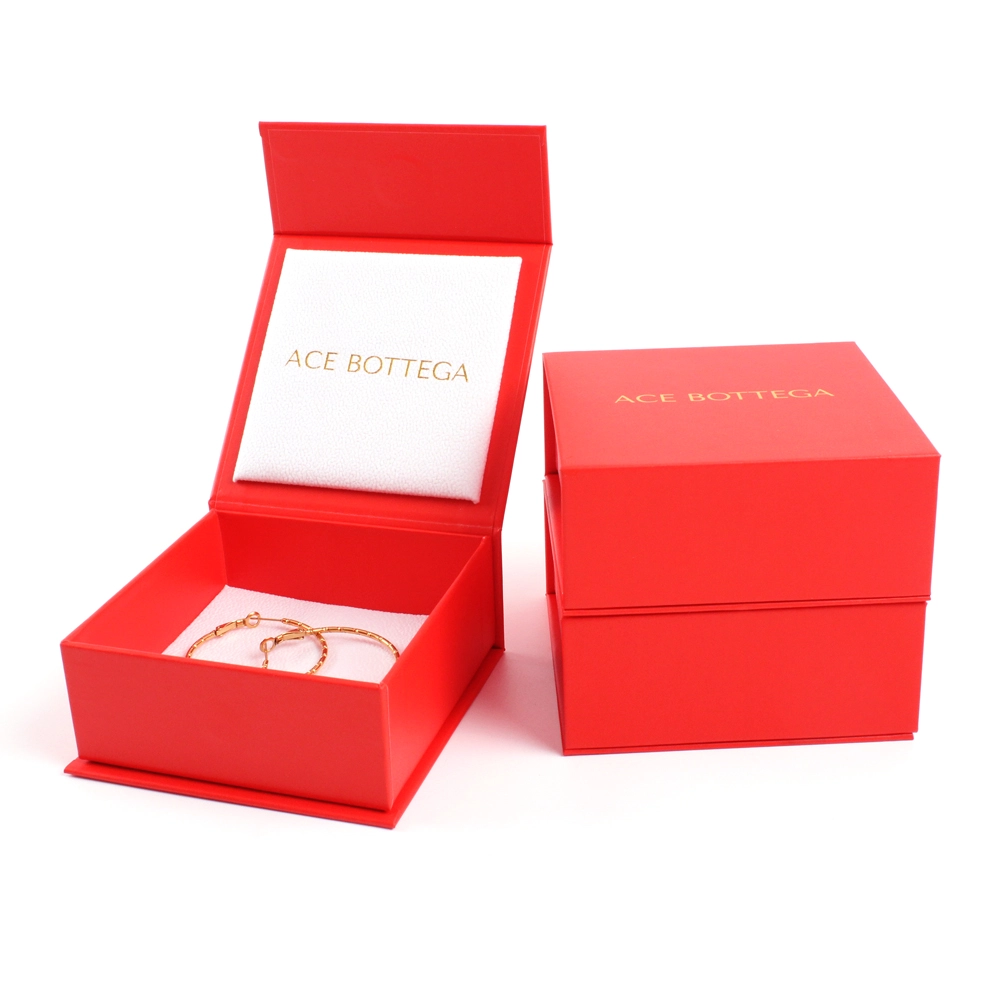
The best way to package a promise ring is a snug box: a 5.5 × 5.5 × 4 cm slotted or velvet-insert box that holds a 2–4 mm band securely, protects the finish in transit, and opens slowly enough to make the moment feel intentional. In this guide we break down the four box types that work, compare insert materials, and show how to protect a ring from tarnish and damage — based on what we build every week at Qdylc for jewelry brands shipping to the US and Europe.
A promise ring sits in an unusual position in the market. It is often a first fine-jewelry purchase, it is bought for a milestone rather than a wedding, and it is usually presented in a quiet, private moment rather than a ceremony. That changes the packaging brief completely: the box has to feel precious without feeling bridal, protect a very small object, and survive e-commerce shipping when bought online.
Why Promise Ring Packaging Needs Special Attention
1. The emotional stakes are high, the object is small. A promise ring is typically 1.5–2 mm wide and weighs under 3 grams. In a box that is too large, it slides, looks lost, and the gift feels less considered. Fit is the single biggest factor in perceived quality.
2. Size tolerance is tight. A ring lying loose in a 10 cm box reads as “cheap.” The same ring in a snug 5.5 cm box reads as “jewelry.” This is why insert cavity dimensions — not outer box dimensions — should drive your spec sheet.
3. It is often bought online. Unlike engagement rings, promise rings are frequently ordered from DTC brands and shipped. That means the box must also function as protective packaging: fixed in place, moisture-protected, and able to survive a 76 cm drop test.
4. It sits next to engagement rings on the shelf. Retail buyers compare. A promise ring box should look clearly different from a bridal box — smaller, softer, often more personal — or the product gets read as a “lesser” engagement ring.
Best Box Types for Promise Rings
1. Slotted Ring Box — the classic workhorse
A slotted box has a die-cut card or foam insert with a narrow slit that grips the band upright. It is the most cost-effective option, works for bands from 1.5 to 4 mm, and displays the ring face-on when opened. Because the ring stands vertically, the stone or engraving is visible the moment the lid lifts — ideal for a one-second reveal.
At Qdylc we produce slotted boxes in kraft, white card and rigid board, with the slot width cut to your exact band thickness. Standard outer size for a single ring: 5.5 × 5.5 × 4 cm. A double-slot version (for couples’ rings) runs about 8 × 5.5 × 4 cm.
2. Velvet Insert Ring Box — the premium option
A velvet- or suede-wrapped insert changes the entire feel of the unboxing. The ring sits in a soft cradle rather than a slot, which suits wider bands, signet styles and any ring with a raised setting that should not be pressed.
Velvet also solves a practical problem: it holds the ring without abrasion. For polished sterling silver or gold vermeil, a fabric contact surface reduces micro-scratches compared with a rigid card slot. This is our most requested structure for brands selling promise rings above the $80 price point.
3. Flip-Top Box with LED — for the proposal moment
A hinged flip-top box with a small LED in the lid is a niche product, but it converts extremely well for promise rings tied to a proposal-adjacent moment. The light lifts the metal and stone instantly, and it photographs well — a real advantage when customers share the moment on social media.
Two engineering notes from our production line: use a replaceable button-cell battery rather than a sealed unit (customs and shipping restrictions are simpler), and keep the LED recessed at least 8 mm from the lid surface so it does not press on the ring when closed.
4. Mini Kraft Ring Box — for eco-conscious brands
A small kraft box with a paper-card insert is the lowest-cost, most sustainable option, and it fits the positioning of indie and handmade jewelry brands perfectly. It is fully recyclable in a single stream when built as mono-material (kraft board + paper insert, no lamination, no foam).
The trade-off is protection: kraft with a paper insert is fine for retail and local delivery, but for long-distance e-commerce we recommend adding a paper-pulp insert or a small bubble wrap layer inside the outer carton.
Insert Materials Compared
| Insert material | Protection | Perceived quality | Relative cost | Best for |
| EVA foam | High — firm, die-cut to shape | Medium | Low | Slotted boxes, shipping-heavy orders |
| Sponge | Medium — soft, compresses | Medium-low | Lowest | Budget lines, multi-ring trays |
| Molded paper pulp | Medium — eco, holds shape | Medium | Low-medium | Sustainable/kraft programs |
| Velvet-wrapped | High — no abrasion | Highest | Highest | Premium promise rings, retail |
| PET (clear) | Medium — displays ring flat | Medium-high | Low | Pendants, display windows |
How to choose: if the ring ships, prioritize EVA or velvet; if it sits on a retail counter, prioritize velvet or PET; if sustainability is the brand promise, choose pulp. Our full comparison with photos and price tiers is here: packaging inserts guide.
Romantic Design Touches
Small details carry disproportionate weight in this category, because the buyer is buying a moment, not a container.
- Inner-lid printing. A single line — a date, initials, or one sentence — printed inside the lid is the highest-return customization in ring packaging. It costs very little (no extra tooling on digital print) and is almost always photographed.
- Wax seal. A 20–25 mm wax seal on the outer sleeve adds a tactile, old-world signal. Practical note: use a flexible wax blend, not brittle sealing wax, or it will crack in cold transit.
- Ribbon width. For a small ring box, 15 mm grosgrain reads clean and modern; 25 mm satin reads more traditional and bridal. Avoid thin 6–10 mm ribbon — it looks like retail packaging, not a gift.
- Foil color. Rose gold and champagne foil photograph better than yellow gold under phone lighting, which matters if your customers share unboxings.
Protecting the Ring in Transit
A beautiful box that arrives scratched or tarnished costs more than the packaging saved. Three layers do the work:
1. Anti-tarnish protection. Sterling silver tarnishes faster in humid, sulfur-rich air. Include a small anti-tarnish pouch or an anti-tarnish strip under the insert. This single addition reduces “arrived dull” complaints noticeably for silver lines.
2. Fix the ring in place. The insert cavity should hold the band with light friction — no rattle when the closed box is shaken. If a ring can move 2 mm, it will hit the lid in transit.
3. Outer packaging. Ring boxes are small enough to be crushed in a mailer bag, so always ship inside a rigid outer carton with 1–2 cm of void fill. If you ship at volume, ask for a drop-test report: our standard is ISTA 1A, a 76 cm drop in 10 orientations.
Quick FAQ
Do promise rings need a special box size? Yes. A single promise ring typically fits a 5.5 × 5.5 × 4 cm box; a band wider than 4 mm or a raised setting needs a deeper insert (5–6 cm outer height). Sizing by insert cavity, not outer box, is what prevents sliding.
Can I order a small batch of custom promise ring boxes? Yes. Full custom printing starts at 500 pieces, and our low-MOQ program (stock structure + digital logo printing) starts at 100 pieces — enough to test a promise ring line before scaling.
What is the lead time? Sampling takes 5–7 days, bulk production 15–20 days for stock structures or 25–30 days for fully custom builds, plus 5–7 days by air or 30–35 days by sea. Plan 6–8 weeks for a launch, and longer for Valentine’s Day or Q4.
Get Custom Promise Ring Boxes
Qdylc is a custom paper packaging manufacturer in Qingdao, China, producing ring boxes, velvet inserts and slotted trays for jewelry brands in the US, Europe and Australia. We quote with free structural drawings, send mockups within 24 hours, and ship DDP so duties are handled before your boxes leave the factory.
Get Custom Promise Ring Boxes → | Contact us for free simple|